Japandi Kitchen: 10 Beautiful Ideas for a Calm, Cozy, and Modern Space
A kitchen can look beautiful without being filled with expensive cabinets, trendy accessories, or perfectly matched furniture. Sometimes, all it takes is a softer color palette, a few natural materials, and a little creativity to make the space feel completely different.
That’s exactly what makes a Japandi kitchen so appealing. Combining the simplicity of Japanese design with the warmth and comfort of Scandinavian interiors, this style creates a space that feels calm, welcoming, and effortlessly elegant.
And the best part? You don’t need a complete kitchen renovation to get the look. Whether you’re decorating a small apartment, working with an outdated rental kitchen, or simply looking for fresh inspiration, these Japandi kitchen ideas will help you create a warm, minimalist space on a realistic budget.
From natural wood accents and open shelving to clever bookcase hacks and cozy lighting, here are 10 ways to bring the Japandi aesthetic into your kitchen.
1. Start With a Soft, Natural Color Palette
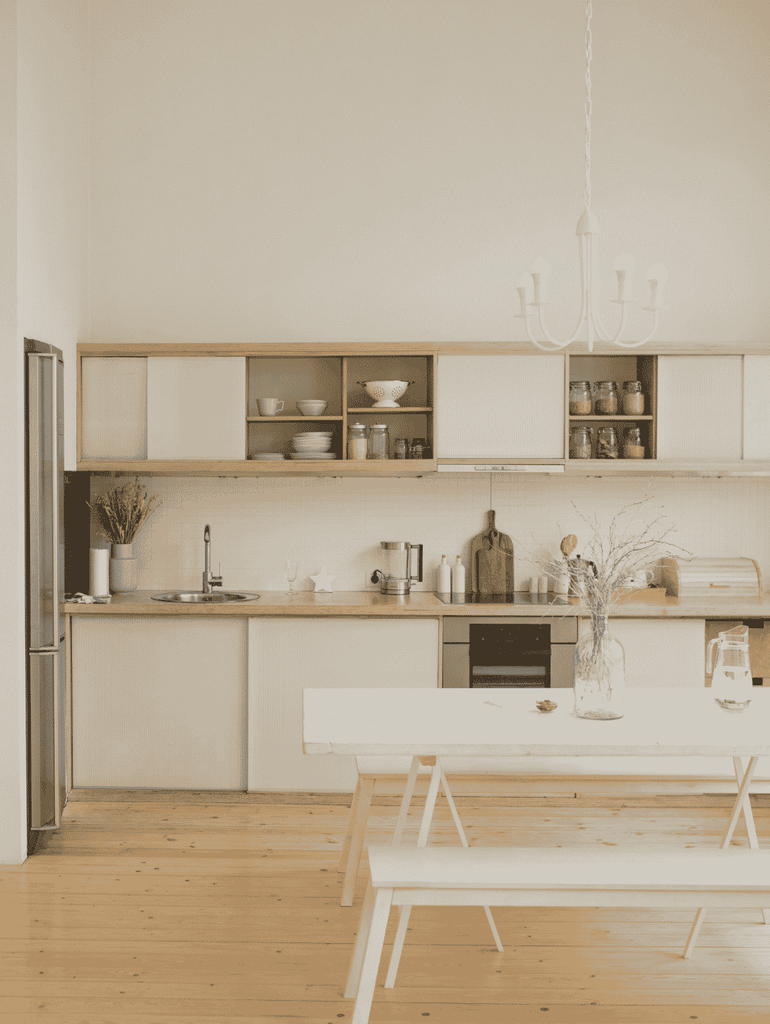
One of the easiest ways to create a Japandi-inspired kitchen is to rethink your color palette. Instead of bright whites and bold contrasts, choose warm neutrals that make the room feel peaceful and inviting.
Think creamy white, oatmeal, warm beige, soft taupe, and muted gray. These shades create a beautiful backdrop for natural wood, stone textures, and simple decorative details.
If your kitchen cabinets are already white, you don’t necessarily need to replace them. Try adding warm wood accessories, beige textiles, or a natural-colored runner to soften the overall look.
Budget-friendly idea: Replace colorful kitchen accessories with a few neutral pieces. Even something as simple as matching ceramic containers, wooden utensils, and linen towels can make the space feel more cohesive.
2. Bring in Natural Wood for Warmth
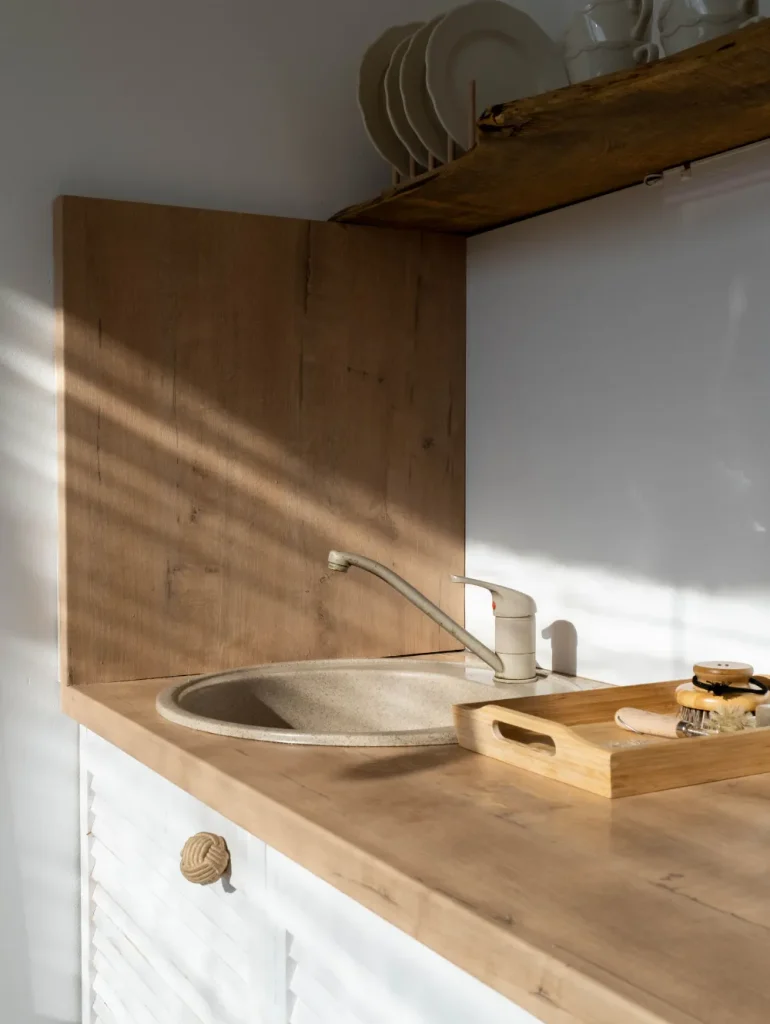
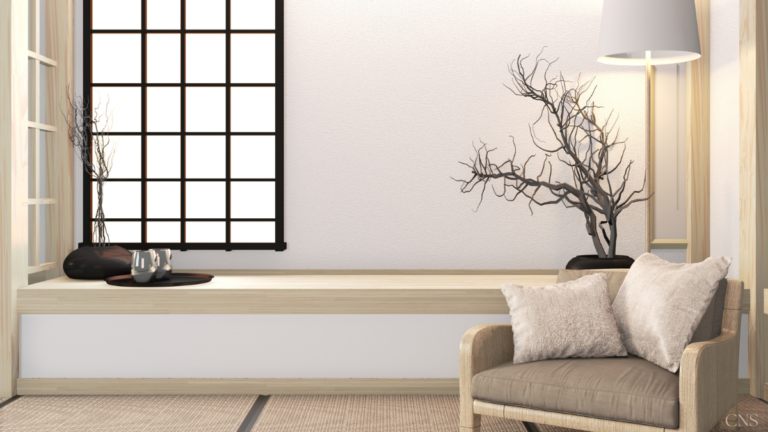
Natural wood is one of the defining elements of Japandi interior design. It adds warmth to minimalist spaces and creates that beautiful balance between clean lines and cozy textures.
Light oak, ash, and warm walnut are especially lovely choices. You can introduce them through cabinet fronts, floating shelves, bar stools, cutting boards, or even a small wooden dining table.
If replacing your cabinets isn’t an option, focus on smaller details. A wooden countertop accessory collection or a simple oak shelf can make a surprisingly big difference.
For a more high-end appearance, stick to one or two wood tones rather than mixing too many different finishes.
3. Try Open Shelving Instead of Heavy Upper Cabinets
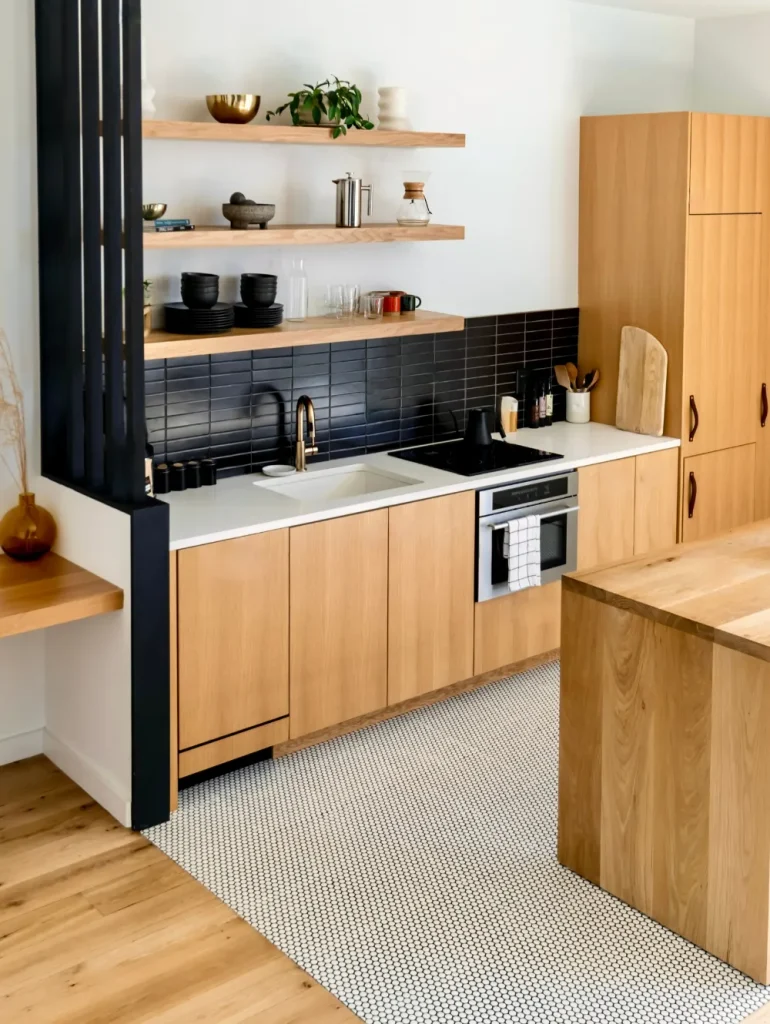
Open shelving is a wonderful way to make a small kitchen feel lighter and more spacious. It also fits naturally into the Japandi aesthetic, where everyday objects can become part of the decoration.
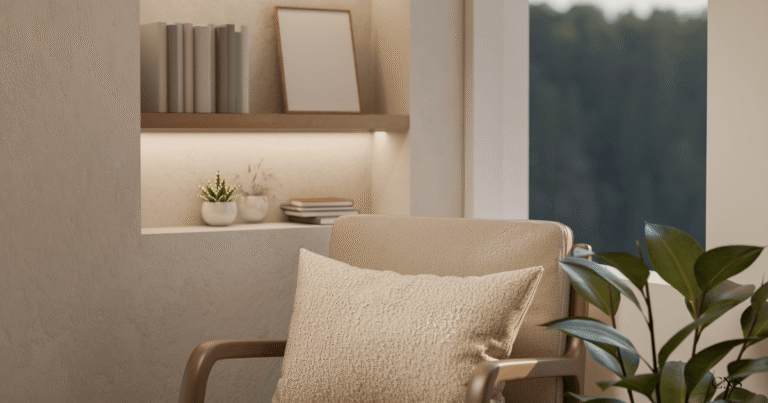
Choose simple wooden shelves with clean lines and avoid overcrowding them. Display a few handmade-looking ceramic bowls, neutral mugs, glass jars, and perhaps a small plant.
The secret is to leave some empty space. You don’t need to fill every shelf from end to end.
For renters, removable shelving solutions or freestanding shelving units can offer a similar look without permanent changes to the walls.
Styling tip: Arrange objects in small groups, mixing different heights and textures. A wooden bowl next to a matte ceramic vase creates a lovely, understated display.
4. Use Bookcase Hacks for Clever Kitchen Storage
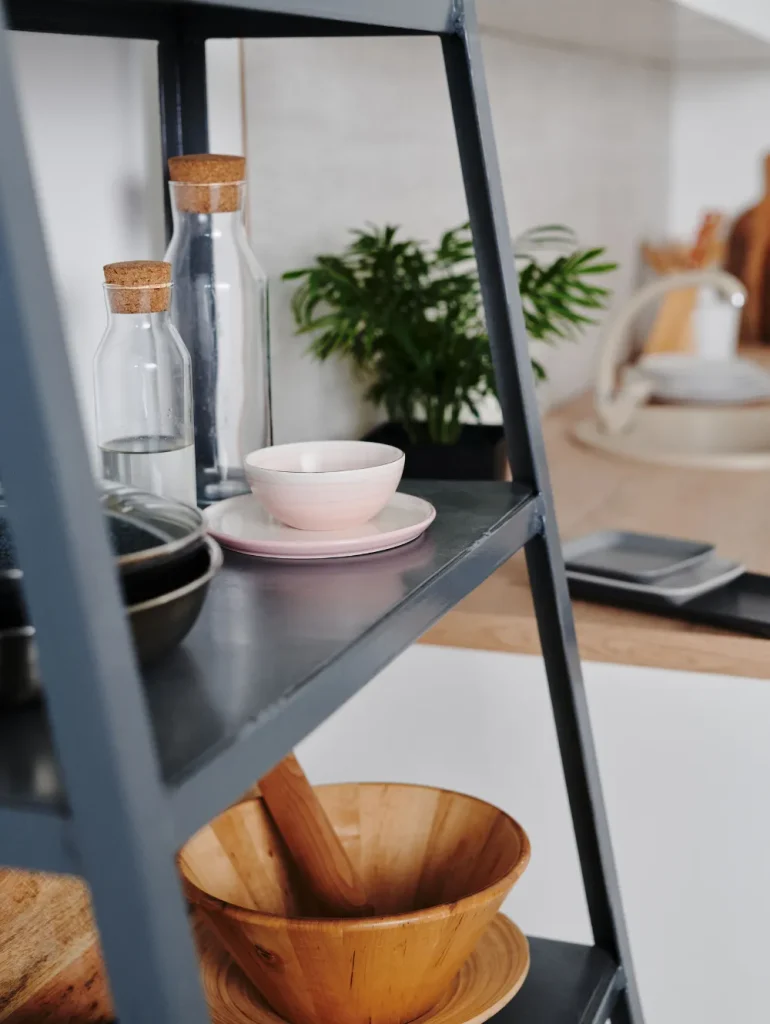
Who says a bookcase belongs only in the living room? One of the most practical budget decorating tricks is turning an ordinary bookcase into a beautiful kitchen storage solution.
A simple IKEA-style bookcase can become a freestanding pantry, a coffee station, or an open display cabinet. This is especially useful in small apartments where additional kitchen cabinets simply aren’t an option.
Choose a bookcase in natural wood, white, or a soft beige shade. Add woven baskets to hide less attractive essentials, and use the open shelves for glass jars, cookbooks, ceramic dishes, and neatly folded kitchen towels.
You can also make a basic bookcase look more custom by adding wooden trim, changing the handles on cabinet inserts, or using peel-and-stick wallpaper on the back panel.
For a more authentic Japandi feel, keep the styling simple. A few matching storage containers, natural textures, and carefully arranged everyday essentials will look much better than a shelf packed with random objects.
A little practical note: Choose a sturdy unit suitable for the weight you plan to store, secure it against tipping, and keep it away from direct heat and excessive moisture. If you’re using it as a pantry, make sure food is stored in suitable sealed containers.
5. Choose Minimalist Cabinet Hardware
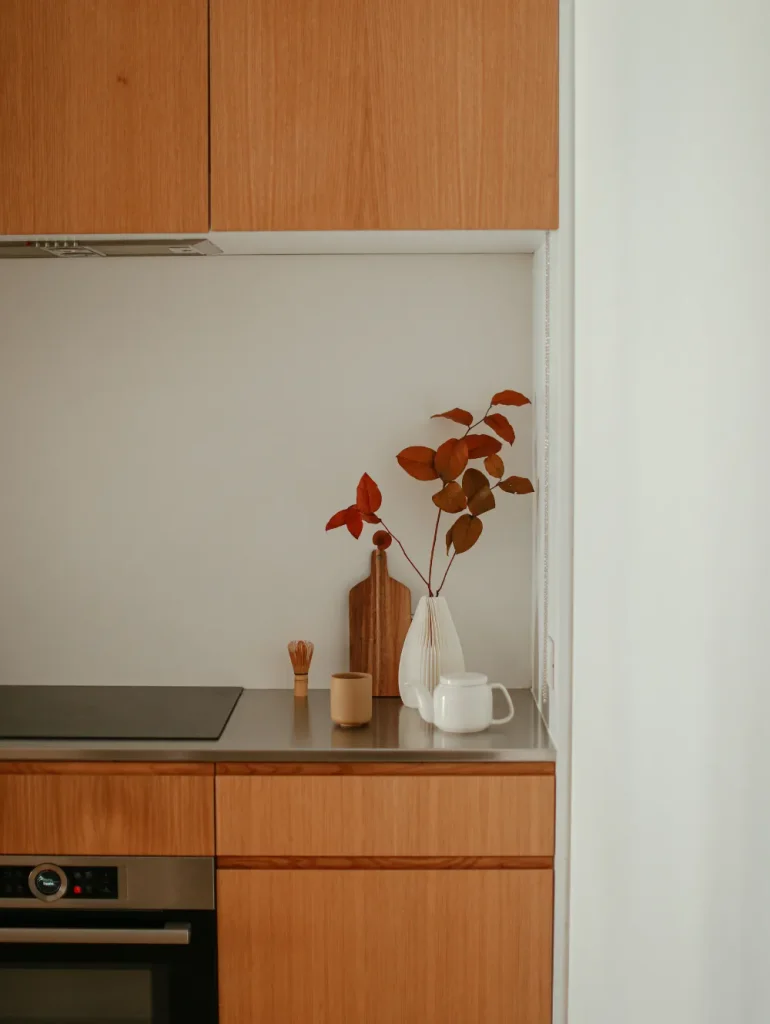
Sometimes the smallest changes have the biggest visual impact. Cabinet handles and knobs might seem like minor details, but they can completely change the character of a kitchen.
Japandi interiors usually favor understated hardware with simple shapes and natural finishes. Think brushed brass, matte black, warm bronze, or discreet wooden handles.
If your existing cabinets are in good condition, replacing the hardware is an affordable way to give them a fresh appearance.
For an even cleaner look, consider simple handleless designs or discreet edge pulls.
The goal isn’t to make everything disappear, but to create a kitchen where every detail feels intentional.
6. Add Warm, Layered Lighting
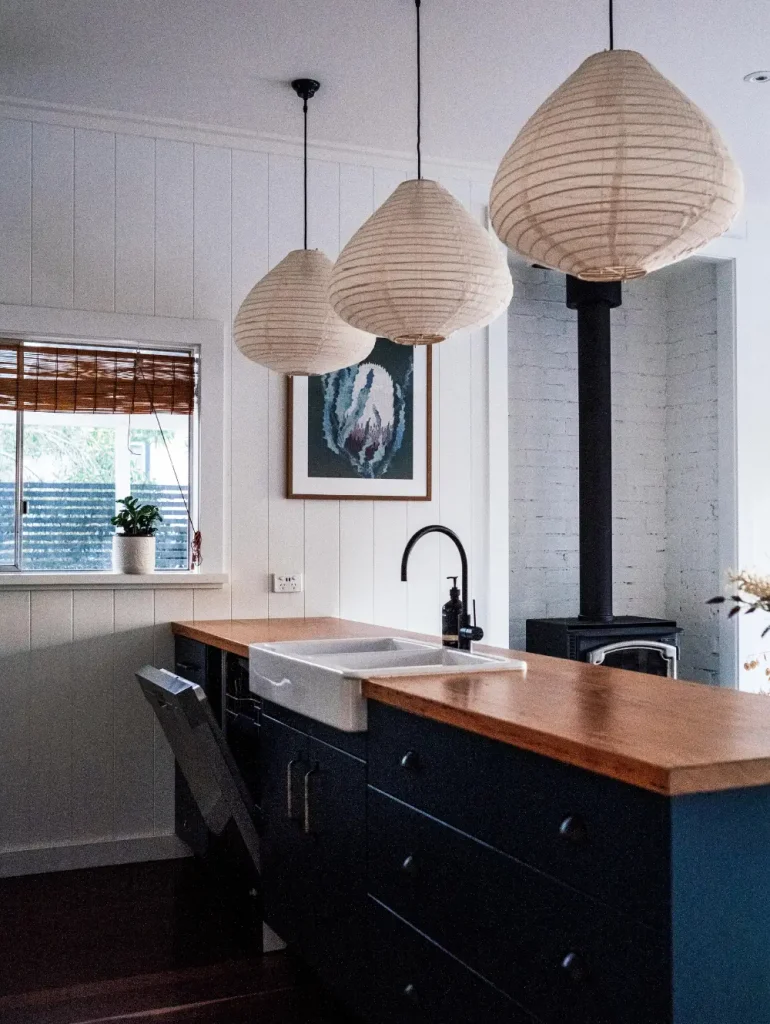
Lighting is essential when creating a cozy Japandi kitchen. Even the most beautiful natural materials can feel cold if the room is lit by harsh, bright overhead lighting alone.
Instead, combine different light sources to create a softer atmosphere. Under-cabinet lighting, a simple pendant above the kitchen island, and a small table lamp on a nearby counter can make the room feel much more welcoming.
Choose warm white bulbs, ideally around 2700K–3000K, for a comfortable evening glow.
For the fixtures themselves, look for natural materials such as linen, bamboo, paper-inspired shades, or simple matte metal.
A sculptural pendant above a wooden dining table can also become a beautiful focal point without making the kitchen feel overly decorated.
7. Mix Stone, Ceramic, and Other Natural Textures
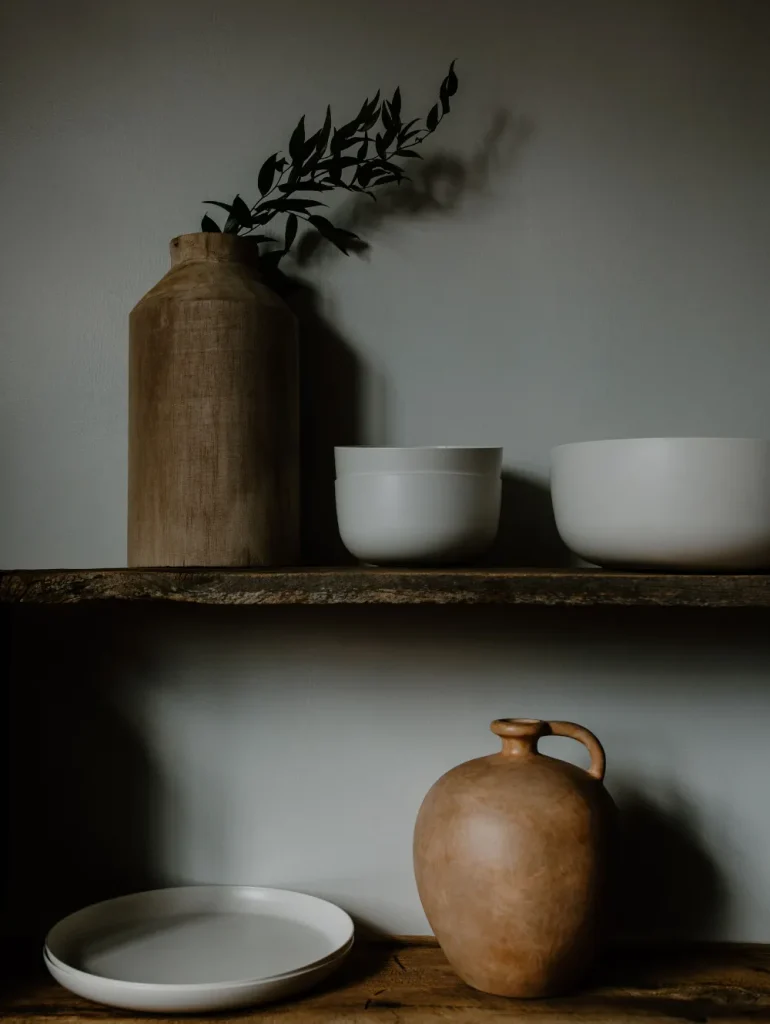
Japandi design is minimalist, but that doesn’t mean the space should feel plain or empty. The secret is to introduce visual interest through different materials and textures rather than lots of colors and decorations.
Think stone countertops, handmade ceramic bowls, textured plaster walls, linen curtains, wooden cutting boards, and woven baskets.
You don’t need expensive marble or custom stone surfaces to achieve this look. A simple stone-effect countertop accessory, a ceramic fruit bowl, or a few textured neutral containers can bring the same natural feeling into your kitchen.
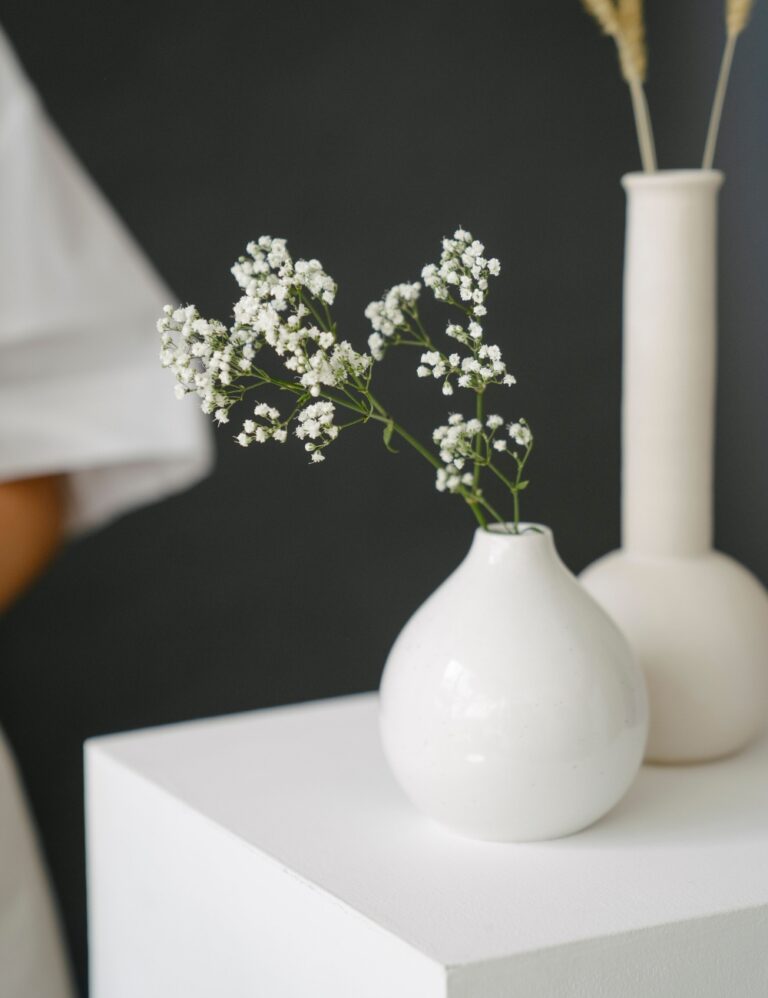
Try combining smooth and rough finishes. A matte ceramic vase against a warm wooden shelf, for example, creates a subtle contrast that feels both relaxed and sophisticated.
8. Create a Small Japandi Coffee Corner
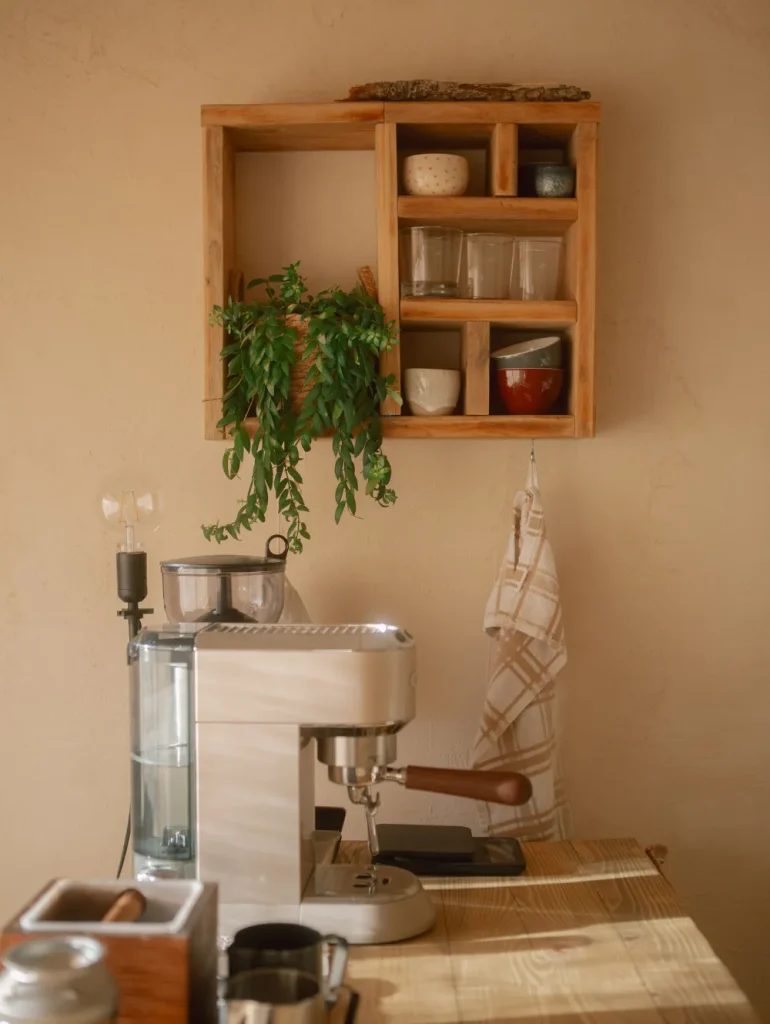
If you love slow mornings and a good cup of coffee, a dedicated coffee corner is a lovely addition to your kitchen.
You don’t need a large counter or a custom-built coffee station. A small section of your countertop, a narrow wooden console, or even one shelf from your bookcase can become a cozy little coffee spot.
Keep the colors simple and choose a few beautiful everyday essentials: ceramic cups, a wooden tray, glass coffee jars, and perhaps a small vase with fresh greenery.
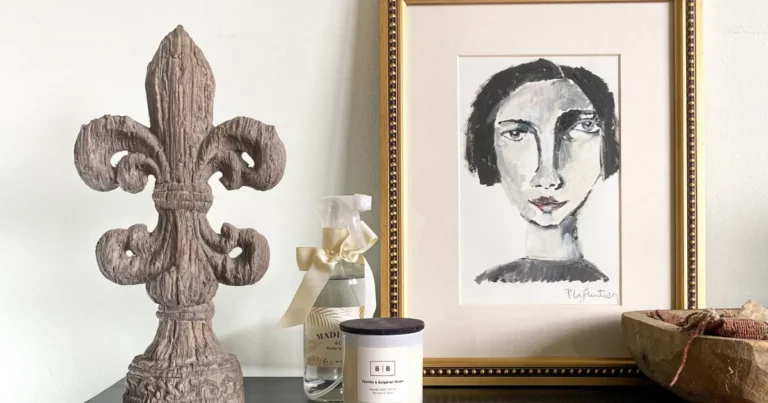
If you have a little extra space, add a warm-toned lamp or a small framed print nearby.
The idea is to create a corner that feels calm and inviting, rather than another area filled with appliances and clutter.
9. Bring in Greenery and Simple Natural Details
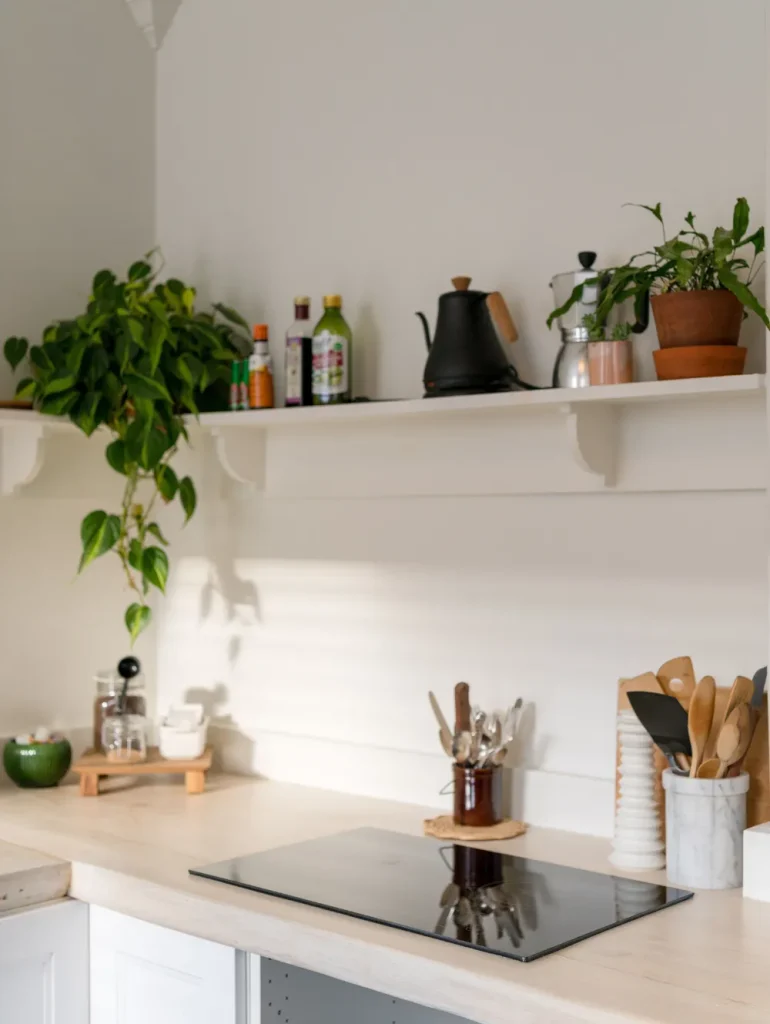
Plants add life to a minimalist kitchen and help soften the clean lines of Japandi interiors.
You don’t need a jungle of houseplants. A small potted herb garden, a simple branch in a ceramic vase, or one trailing plant on an open shelf is often enough.
Fresh herbs such as rosemary, basil, and thyme are especially practical because they look lovely and can be used while cooking.
Choose simple pots in terracotta, stone, or matte beige. Avoid overly colorful planters if you want to maintain that calm, cohesive aesthetic.
Natural greenery works particularly well against warm wood, cream cabinets, and soft neutral walls.
10. Keep the Countertops Simple and Clutter-Free
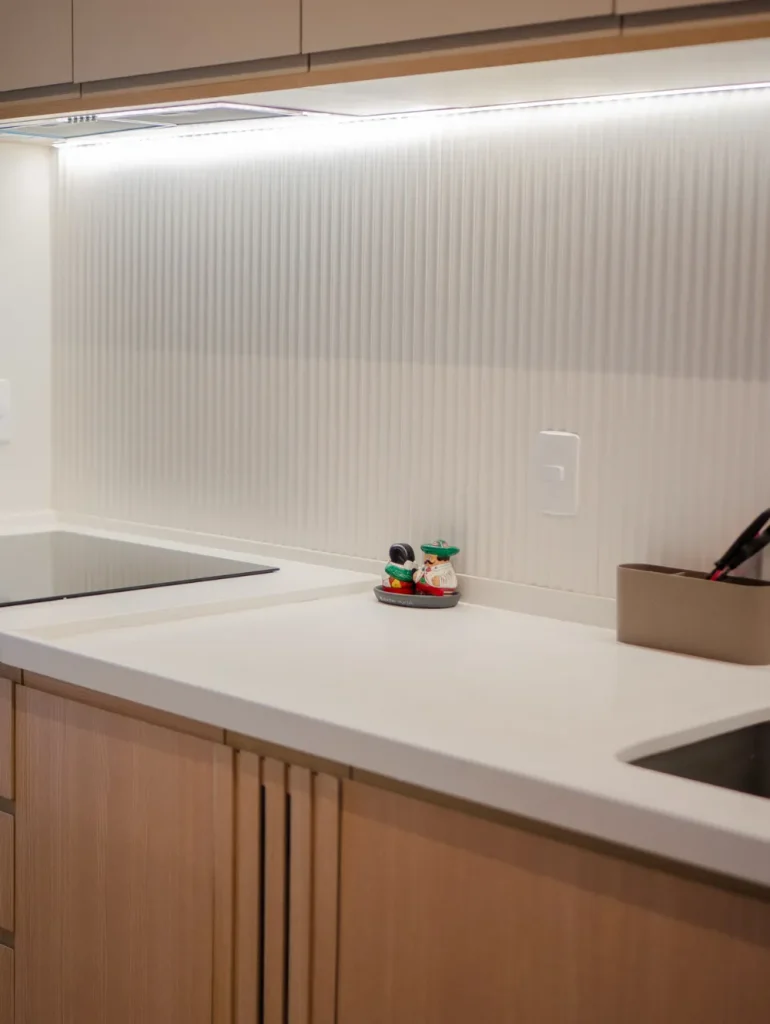
One of the most recognizable features of a Japandi kitchen is its sense of visual calm. You can have beautiful cabinets and expensive accessories, but if every inch of the countertop is covered, the overall effect will feel busy.
Start by removing anything you don’t use regularly. Store small appliances in cabinets where possible, and keep only a few attractive everyday essentials on display.
A wooden cutting board, a ceramic utensil holder, a fruit bowl, and a small plant can be enough to create a beautifully styled countertop.
This doesn’t mean your kitchen needs to look like a showroom. The aim is to make everyday life easier while keeping the space visually relaxed.
A little empty space can be just as beautiful as a carefully chosen decorative object.
How to Create a Japandi Kitchen on a Budget
You don’t have to spend thousands of dollars to achieve a beautiful Japandi-inspired kitchen. In fact, this style works particularly well with affordable updates because it focuses on simplicity, natural materials, and thoughtful styling.
If you’re decorating on a budget, start with the changes that make the biggest difference:
- Refresh the color palette: Introduce warm beige, creamy white, and soft neutral tones through accessories and textiles.
- Use bookcase hacks: Turn an affordable bookcase into a pantry, coffee station, or open kitchen storage unit.
- Add natural wood: Use cutting boards, shelves, stools, and small accessories to bring warmth into the room.
- Update cabinet hardware: Simple new handles can make existing cabinets feel more modern.
- Improve the lighting: Warm bulbs and a simple pendant can instantly change the atmosphere.
- Declutter your countertops: Sometimes the best decorating update costs absolutely nothing.
If you’re renting, focus on reversible changes such as freestanding furniture, removable wallpaper, decorative trays, and renter-friendly lighting solutions.
You can create a beautiful kitchen without changing the things you don’t own.
Final Thoughts: A Japandi Kitchen That Feels Like Home
A beautiful Japandi kitchen isn’t about having the most expensive cabinets or perfectly styled shelves. It’s about finding the right balance between simplicity, warmth, and everyday functionality.
With natural wood, soft neutral colors, warm lighting, and a few thoughtful storage solutions, even a small or outdated kitchen can become a calm and welcoming space.
And don’t underestimate the power of simple bookcase hacks. A basic shelving unit, styled with natural materials and clever storage baskets, can become one of the most practical features in your kitchen.
Start with one small change, experiment with textures, and build the look gradually. The most beautiful spaces are often the ones that feel comfortable enough to actually live in.
Which Japandi kitchen idea would you try first? Would you go for natural wood shelves, a cozy coffee corner, or a clever bookcase pantry? Share your favorite in the comments, and don’t forget to save this post to your Pinterest boards for your next kitchen makeover!